



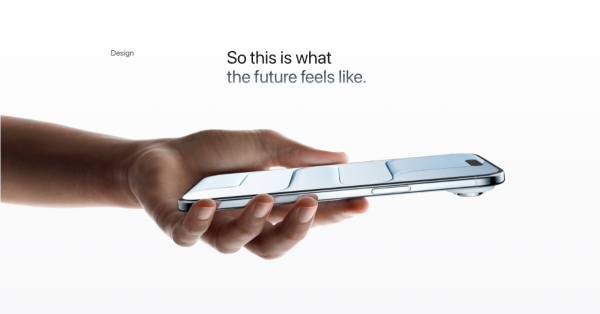
The new iPhone Air, courtesy of Apple.
Apple has just recently released their newest iPhone installment— the iPhone Air.
The mega-corporation’s website showcases the iPhone Air’s seductive, thin figure. The phone’s measurements are provided by Apple like a mother oversharing her daughter’s small, adorable details– “She has these freckles on her cheek, isn’t she just adorable?” Only the world is happily receptive to the iPhone Air’s specs, and many wouldn’t skip an advertisement to read them: The new iPhone Air spans 5.6 mm wide (or 0.56 cm) and weighs just 165 grams (less than ⅖ of a pound). It’s the thinnest iPhone ever.
And because it’s Apple, you can bet the latest device has the most promising features. The website emphasizes the iPhone Air’s A19 Pro chip, which maintains mega-efficient CPU performance and Apple Intelligence capabilities built within (Apple Intelligence is the company’s own artificial intelligence system that provides image creation and other cognitive shortcuts all the same.) It also highlights the newest member to the Apple Family’s flexible camera working options, making photo ops and selfie-taking much more versatile, yet more complex. The iPhone Air is also pre-installed with the iOS 26 update, which, if you’re unfamiliar with, is the most recent iPhone Operating System that completely revolutionizes the Apple homescreen, including app displays and call displays. The new operating system is gaining a lot of support and kudos across Apple users, who acclaim its 3D, crystal-like aesthetics. Some even say that it’s Apple taking a step back from minimalism and moving toward detail again.
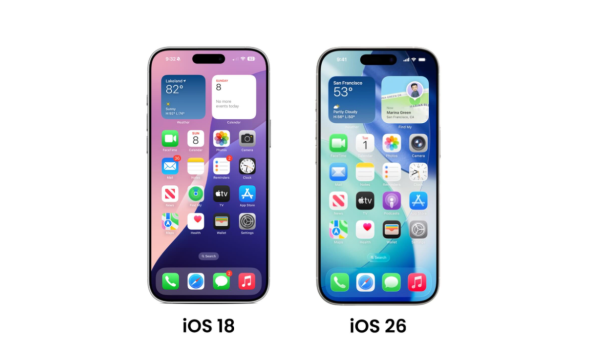
A comparison of the latest operating system updates, courtesy of Andrew Clare (x.com). iOS 26 is vaguely more reminiscent of the oldest operating systems in the way that detail, shape, and lighting of icons is more lush.
Metaphorically, Apple spells out consumerism in its prettiest font. The newest iPhones are manufactured to be more captivating than the last, but not at all any less expensive. The iPhone Air starts at $999, but it’s everything you could ever ask for. Shiny. Modern. Convenient. A slimmer or thicker size based on what the year calls for. 2025 seemed to have called for a thinner era, and Apple delivered just that– “so impossibly thin and light that it nearly disappears in your hand” (Apple), as the website describes it.
I asked a friend of mine, Jacob, who is a fellow writer and editor at The Caldron, how he felt about the new iPhone Air and iOS 26. He didn’t have much regard for the new iPhone Air, as he had “just gotten the iPhone 16 as a replacement for my old phone that broke over the summer” Jacob continues, however, that iOS 26 “is so much more prettier than the old iOS. And it’s more customizable.” By customizable, Jacob refers to the new lockscreen feature, in which the size, coloring, font, and layering of the time and date display is now accessible. In iOS 18, which is the old operating system that I currently use, only the thickness, color, and font of the time display is amendable. The increase in customization is what makes the new iOS, and subsequently, the iPhone Air, feel more flexible, modern, and enjoyable.
The pull is undeniable that Apple products have on our generation, and students here at JCHS are no exception to it. It’s not just Jacob, or myself—it’s the majority of students here that have an iPhone or pair of AirPods. It’s no surprise that word of the iPhone Air gets around quick, and there are plenty of responses to its development both locally and globally.
After hunting through social media’s many biomes, I found both feverish, cold, and lukewarm reactions.
The iPhone Air makes my other phones feel like bricks from the 90s…
No matter how much you hate the iPhone Air, you’re going to love how it feels the first time you hold this phone.
You do not need a new iPhone.
The coldest of them all—the last comment—was actually a common phrase throughout X (formerly Twitter). Many social media users, especially on the app X, appear to take a stance against the iPhone Air release to take a greater stance against consumerism. You do not need a new iPhone. I’ve personally seen this phrase in fandom spaces, in the context of a famous influencer, model, or artist attending an Apple Premiere event. Fans on social media repost or quote the event to support their favorite stars, but never forget to mention that you should boycott Apple, to not support the product, and that You do not need a new iPhone.
Upon reading more into this ominous and terse phrase, I’ve learnt that many people are purposely refraining from buying at Apple to support the people of Congo.
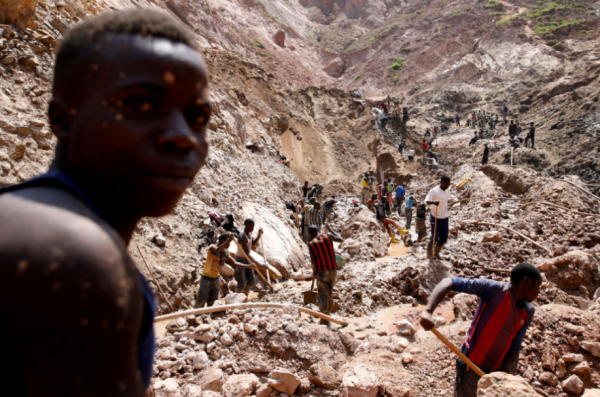
Photo of miners, including children, in Congo. Courtesy of Reuters
In April 2024, reports came out from international lawyers that raise questions about the mega-corporation’s inhumane treatment of the Congolese. To manufacture all of our beloved Apple devices– your AirPods Pro, iMac, iPad, and your sleek, thinnest-ever iPhone Air– the “3T” minerals are required (tin, tungsten, and tantalum). Apple CEO Tim Cook had affirmed that these vital materials were mined and exported from Rwandan territory, but Robert Amsterdam, author of a report on the topic titled “Blood Minerals: The Laundering of DRC’s 3T Minerals by Rwanda and Private Entities”, wrote that Rwandan “production of key 3T minerals is near zero, and yet big tech companies say their minerals are sourced in Rwanda” (Amsterdam and Partners), among other reports which call out Apple’s cover up.
The truth is, these crucial components of Apple manufacturing come from the hard, treacherous work of the Congolese in their own territories, then are illegally exported outside of Democratic Republic of Congo. The minerals are pillaged from DRC, contributing to the commercialization of natural resources, environmental drainage, and the cruel, forced labor of the Congolese, including the children of the nation. The expansive and seemingly perpetual scale of this grueling lifestyle has “caused unfathomable harm and suffering in the civilian population in mining areas” (Amsterdam and Partners), yet most consumers turn a blind eye to this terror—some aren’t even aware of its existence. While this inhumanity isn’t exactly mainstream or common knowledge, it is still an issue worth refraining from buying a new phone for. The DRC has filed a lawsuit against Apple (one stating that the iPhone is made from “blood minerals”) for the minerals supply chain in their nation, but the subjugation of the Congolese is still an ongoing issue today.
The iPhone Air is attractively modern, packed full of Apple’s newest operating systems and proficient software, and thinner than ever. It’s all this fast-moving, consumerist world could ever desire in a phone—convenient, appealing, customizable—and better than the last. While others praise this new release for its revolutionary sizing and visuals, others criticize the very concept of consumerism and just where the iPhone Air originated from—the mistreatment of the Congolese.
The iPhone Air can mean newfound aesthetics and material satisfaction for some, but for others, it means the perpetuation of forced labor.
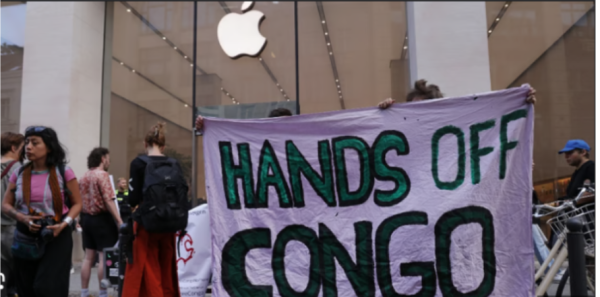
Photo of protests against Apple’s cruelties in Congo. Courtesy of Cybernews