

What if that song you are obsessed with was not written by a person? What if half of your 2026 Spotify Wrapped turns out to be AI-generated? What if the artwork hanging in a gallery, or even the poster for your favorite movie, was created by a machine?
In our current world, it seems like artificial intelligence is everywhere. ChatGPT, Google Gemini, and even the ads you see online or in storefront windows. But where do we draw the line?
In school, teachers use AI detectors to catch students using ChatGPT for papers, and its use is often forbidden. AI tools are blocked by GoGuardian on school Chromebooks, and essays are run through Turnitin. AI can write your paper for you or create new artwork, but can it also be helpful? Can we use AI alongside an assignment to better visualize a character through a song, or get outlining tips for our next essay?
The JCHS English 10 Honors class has been given an assignment in which students work with generative AI to write a song about the character Holden Caulfield from The Catcher in the Rye. Students are instructed to “use AI to create songs that reflect Holden or are written from Holden’s perspective at this point in the novel.”
Students are using AI technology as a tool to build on their analysis and work creatively, rather than having it rewrite an essay or generate something with no personal input. When asked about the positives of using generative AI to build on and improve work, Dr. DiMattia explained, “AI can be used and should be used as a stepping stone for the artist to then extrapolate those ideas in their own unique and creative ways. I do not think that it should be used in place of personal creativity and design, because that takes away the freedom we have as humans to add beauty to this world. That needs to come from within, rather than from an electronically generated mechanism.”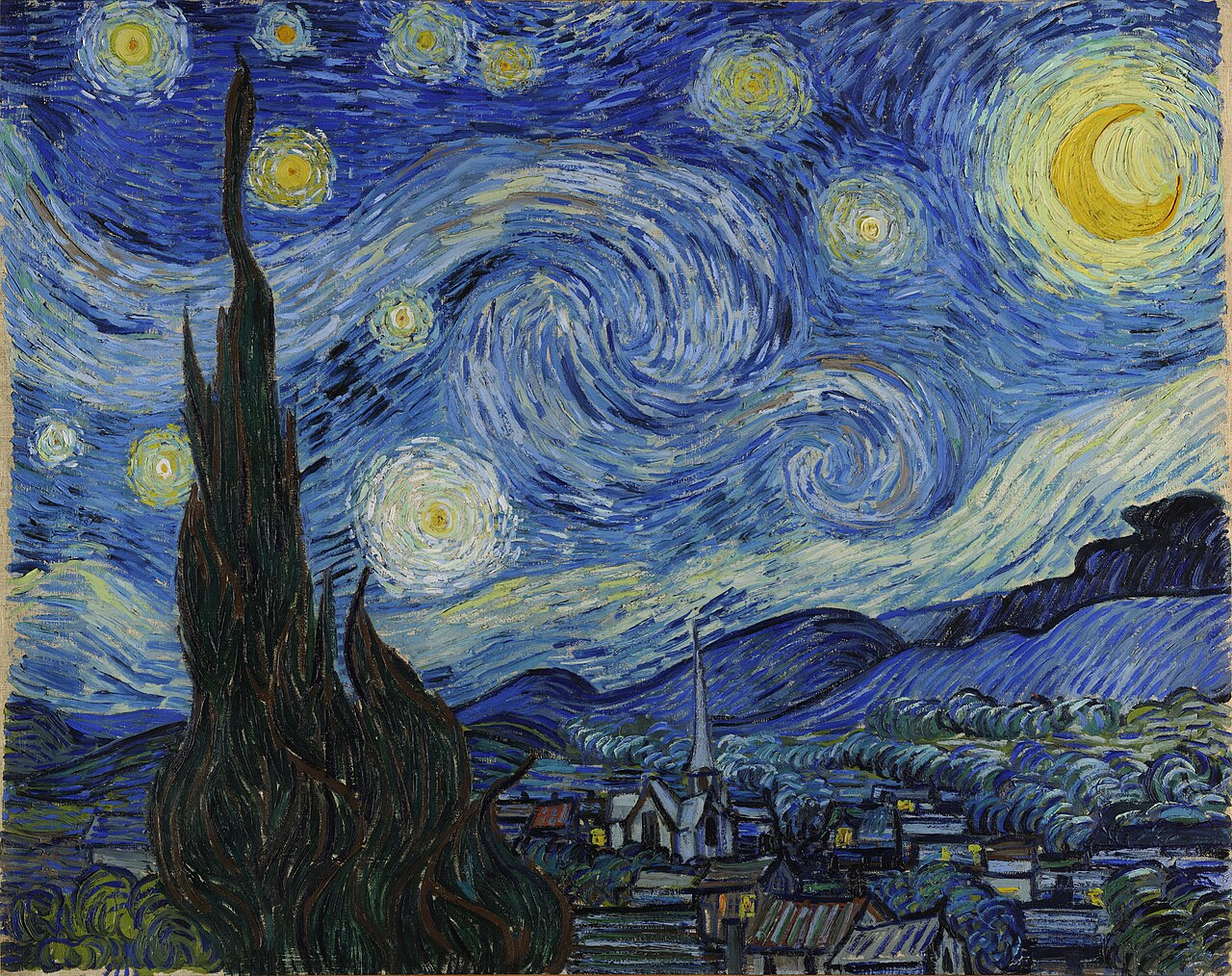

Starry Night by Van Gogh (top), and a rendition using Google Dream courtesy of Google (bottom)
What About Works in Museums That Already Use AI?
If you have been to the MoMA recently, you may have seen a giant screen displaying shifting patterns. This type of work may seem, as many have called it, “AI slop,” but the model actually scans artwork in the MoMA archives and fills in blank spaces. “The machine learning model looks at that empty space and says, ‘Nothing exists here. But what could exist? What might exist?’” explained Michelle Kuo.
But does artwork like this create a pathway for an AI takeover of the art industry?
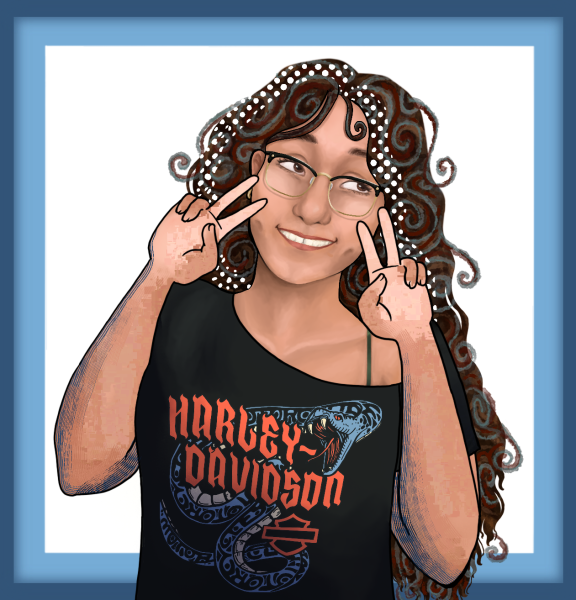
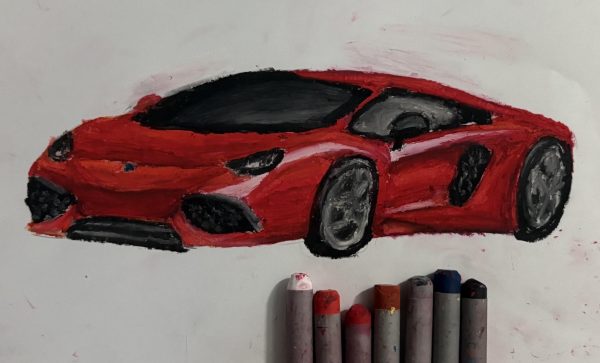
To gain perspective on art in the industry and how the future of art looks both in the classroom and beyond, The Caldron spoke with aspiring artist and JCHS sophomore Mia Capote, who has worked with both traditional and digital mediums.
Do you think using AI for ideas is ethical if the final work is rendered or redrawn by you?
“The consequences of AI far outweigh anything good that could possibly come from it,” Capote said. “The reward and pride you have as an artist is much greater when you do it yourself. A generated image has subtle differences from real life. Your reference is not going to be as realistic as a photo.”
Should AI be used in the classroom, or should it continue to be banned?
“AI makes mistakes. It can give misinformation and pull from sources that are not reliable,” Capote said. “It is useful in medical technology, where doctors cannot see with their own eyes. Any AI in the classroom is ultimately going to be abused by students.”
AI can seem like a double-edge sword, but with the right techniques, can it “be used as a stepping stone” in the classroom? Or do the consequences of artificial intelligence far outweigh the benefits it brings? Send any thoughts you have to us at the Caldron.
Sources
https://www.moma.org/magazine/articles/839