




March is Women’s History Month and is celebrated all around the world. The month exists to honor, recognize, and celebrate women who have made contributions to society or are simply surviving each day. Nonetheless, Women’s History Month is momentously important to our society as a whole due to the enormous contributions that women have made and are making in our world today which often go overlooked. Whether that be in politics, science, sports, music, and art, women are making waves that have led to great change in our world. But first lets start off with some history because it took a while for women to even be acknowledged let alone celebrated.
Before Women’s History Month was established, there was Women’s History Week. One week to celebrate contributions that women have made in society. It began in Santa Rosa, California where The Education Task Force of the Sonoma County Commission on the Status of Women, organized a week to celebrate the contributions of women in 1978. Amazingly, this celebration spread across the country as other communities began their own Women’s History Week just the following year. In 1980, an association of women’s groups along with historians, which were led by the National Women’s History Project or better known today as the National Women’s History Alliance, were successful in fighting for national recognition. So in February of 1980, President Jimmy Carter issued what was known as the first Presidential Proclamation which declared the Week of March 8th, 1980 as National Women’s History Week (womenshistory.org). A few years later in 1987, Congress passed Public Law 100-9 which designated March as “Women’s History Month” and following presidents have continued to acknowledge this celebration.
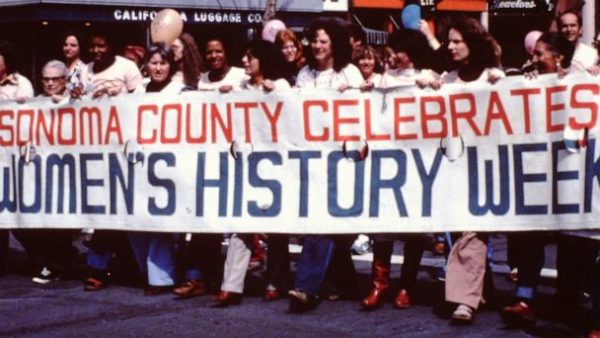
That was only a brief summary of what led to the establishment of a month celebrating, honoring, and recognizing women in just the U.S. Now, let’s dive deeper into a three women who helped spark change both past and present:
Elizabeth Cady Stanton:
Although it may be surprising to some today, women had to fight for their right to vote and were not granted suffrage until 1920 with the creation of the 19th amendment. But that did not mean that the fight began only in the 20th century, but rather it began dating back to the mid-nineteenth century with the women’s rights movement. The first attempt to create a national movement for women’s rights started in Seneca Falls, New York during July of 1848 with women like Elizabeth Cady Stanton (history.house.gov).
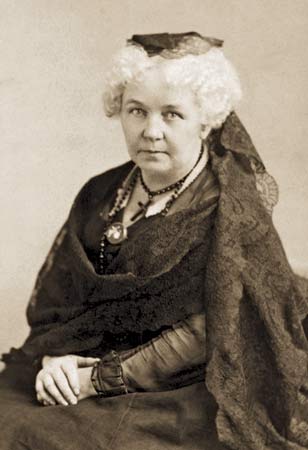
Stanton was an important leader during the movement due to her organization of the first women’s rights convention where she was an author of the revolutionary Declaration of Sentiments, a document inspired by the Declaration of Independence where women advocated for equality for both men and women. She later championed reforms such as education, property rights, and suffrage for women.
Her work during the mid 19th century allowed for the eventual creation of the 19th amendment and women’s eventual right to own property, get an education, keep their own wages, along with other legal rights women have today!
Katherine Johnson:
Both a mathematician and physicist, Katherine Johnson revolutionized the rights for all women but mainly African American women. She was handpicked to be one out of three black students and only women to integrate West Virginia’s graduate schools. After years of work and sacrifice, Katherine and her husband moved to Virginia to pursue her opportunity to fill a vacant spot at the National Advisory Committee for Aeronautics better known as NASA. She was given the job in 1953, and only two weeks into her tenure, she was assigned a project in the Maneuver Loads Branch of the Flight Research Division where her job soon became permanent (NASA)
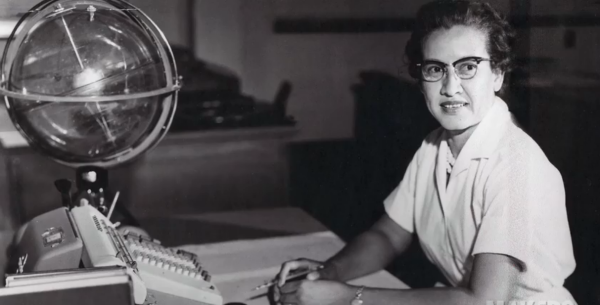
For many, the 1957 launch of the Soviet satellite Sputnik changed history and truly put Katherine’s life into motion. She was in charge of trajectory analysis for Alan Shepard’s Freedom 7 mission in May of 1961, which was America’s first human spaceflight. Other great contributions include coauthoring the “Determination of Azimuth Angle at Burnout for Placing a Satellite Over a Selected Earth Position” which was the first time a woman in the Flight Research Division had received credit as an author of a research report (NASA).
Not only did Katherine have to face barriers from her gender but also from her race, yet her impacts on women mathematicians and scientists today will never be overlooked. After her passing in 2020, the NASA Administrator James Bridenstine stated “She [Katherine] was an American hero and her pioneering legacy will never be forgotten” (NASA)!
Sonia Sotomayor
Appointed in 2009, Sonia Sotomayor is the first Latina and third woman to serve in the U.S. Supreme Court. Her early success allowed her to get a scholarship to attend Princeton University where she served as co-chairman of the Puerto Rican activist group called Accion Puertorriquena. After she accused the school administration for discriminating against Puerto Ricans, she was led to create an impressive senior thesis discussing the life of the popular Puerto Rican Luis Munoz Marin which aided her into enrolling at Yale Law School (Oyez).
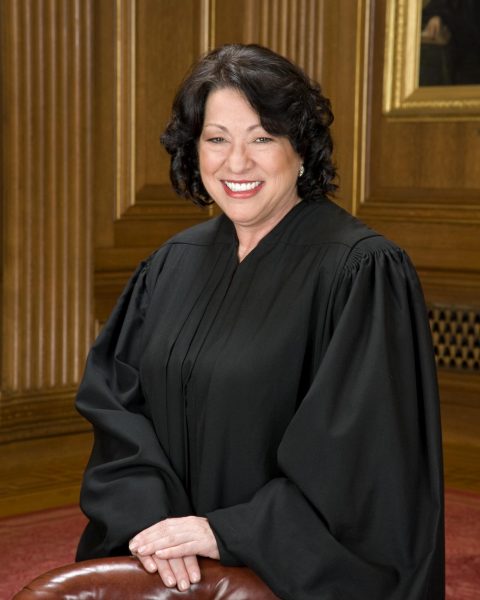
After working her way through the ranks of city law, former President Barack Obama appointed her to the Supreme Court on June first, 2009. During her time serving as a supreme court justice, Sonia has made big legal impacts on society today. She ruled in favor of Obergefell v Hodges which legalized same sex marriage nationwide. She also ruled in the majority of two cases upholding the Affordable Care Act. She has authored the influential concurrence in U.S. vs Jones which regards GPS tracking and privacy of individuals. Along with being known as “People’s Justice” as it is common for her to question lawyers and as well as engage with the public (Oyez).
Overall, Sonia has made such an impact on society today through her legal decisions as well as representing women and women of color in high job positions. Today, women all over the world look to her as an example of being able to achieve their dreams. To conclude, Sonia once said, “I do know one thing about me: I don’t measure myself by others’ expectations or let others define my worth”!
These are only three women who have made impacts in society today, who have redefined how women are perceived in the world. Their hard work, courage, and determination are key features as to how women are able to be successful in our society. There are a multitude of other women in politics, science, sports, music, and art who have made a difference and continue to pave the way for other women in society to do so as well! I encourage you to do further research on influential women in society today who have reshaped boundaries and expectations for young women and girls today!
HAPPY WOMEN’S HISTORY MONTH!