





Many protesters have gathered and marched through the streets of Tehran and Iran’s other major cities this week to protest the theocracy and the Ayatollah–the leader–of the country. The government of Iran operates under a theocracy, which means the laws of the country follow the religious practices outlined in a certain religion. There exists a few current theocracies at this time, including Saudi Arabia, Afghanistan, Yemen, Mauritania, and Vatican City. However, among them, Iran is often seen as the most prominent.
Iran wasn’t always theocratic, contrary to popular belief. The shift to theocracy came during the 1979 Islamic Revolution, where the Shah of Iran was overthrown and replaced with an Ayatollah who immediately started governing according to the Velayat-e Faqih (Guardianship of the Islamic Jurist). The reasoning behind the coup was that many believed that Shah Mohammad Reza Pahlavi focused too much on westernization, and his opposition wanted to return Iran back to its religious principles. However, with that came a new governmental system that required Iran’s laws to conform to Islamic law, as interpreted by Shi’a religious authorities. Sharia Law, as it is commonly called, mandates that all laws enacted by the country must conform to the Islamic texts. This also comes with punishments for those who act in a way against the government or the Islamic texts. Western media and international human rights observers have criticized Iran’s interpretation of Islamic law as being overly strict, especially in its treatment of women.
However, many have started to gather in protest to the Ayatollah’s regime. In fact, they are calling for his overthrow, and the reinstatement of the former Shah’s son, Reza Pahlavi. Pahlavi has been instrumental in organizing the protests, calling to action millions of Iranians to protest the theocratic and dictatorial regime. The protests have spread to all 31 of Iran’s provinces, which include over 100 cities and towns in which demonstrations have taken place.
These peaceful demonstrations have been met with extreme force by the government and military. Peace organizations like the Human Rights Activist News Agency (HRANA) have documented over 34 confirmed deaths, which includes 5 children–all at the hands of the Iranian military (bbc.com). The Iran Human Rights organization has documented 45 protesters killed, and 8 who were children. Clearly, it is hard to get a clear number due to the violence and unrest of both the protesters and the government.
Iran hasn’t seen this scale of protests since 2009, when many gathered to protest a manipulated presidential election. Dozens of protesters were killed then and thousands were detained. Protesters have not lost hope though, chanting phrases like “Long live the shah” and “Don’t be afraid” of the possible repercussions.
The Iranian media has tried to quell support for the protesters, downplaying the scale of the protests and some denying their existence all together. However, many photos and videos exist of the protests, including videos and images of security officers opening fire onto the crowd. Videos also show protesters being detained and forcefully arrested. The government of Iran has forced a blackout on the citizens of Iran, according to NetBlocks, a digital observer of media censorship (bbc.com).
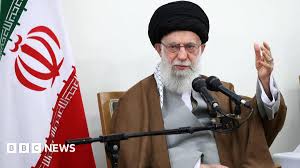
The Ayatollah of Iran, Ali Khamenei, has spoken on the issue, saying that he is making attempts to “speak with the protesters” but also that the “rioters must be put in their place” (bbc.com).
Overall, the protests do not seem like they will stop soon. Many urge safety for the protesters but do not try and dissuade them from continuing. Many believe that a governmental change is necessary for Iran’s future. Only when the government changes, is when Iran can truly be free, many say.