







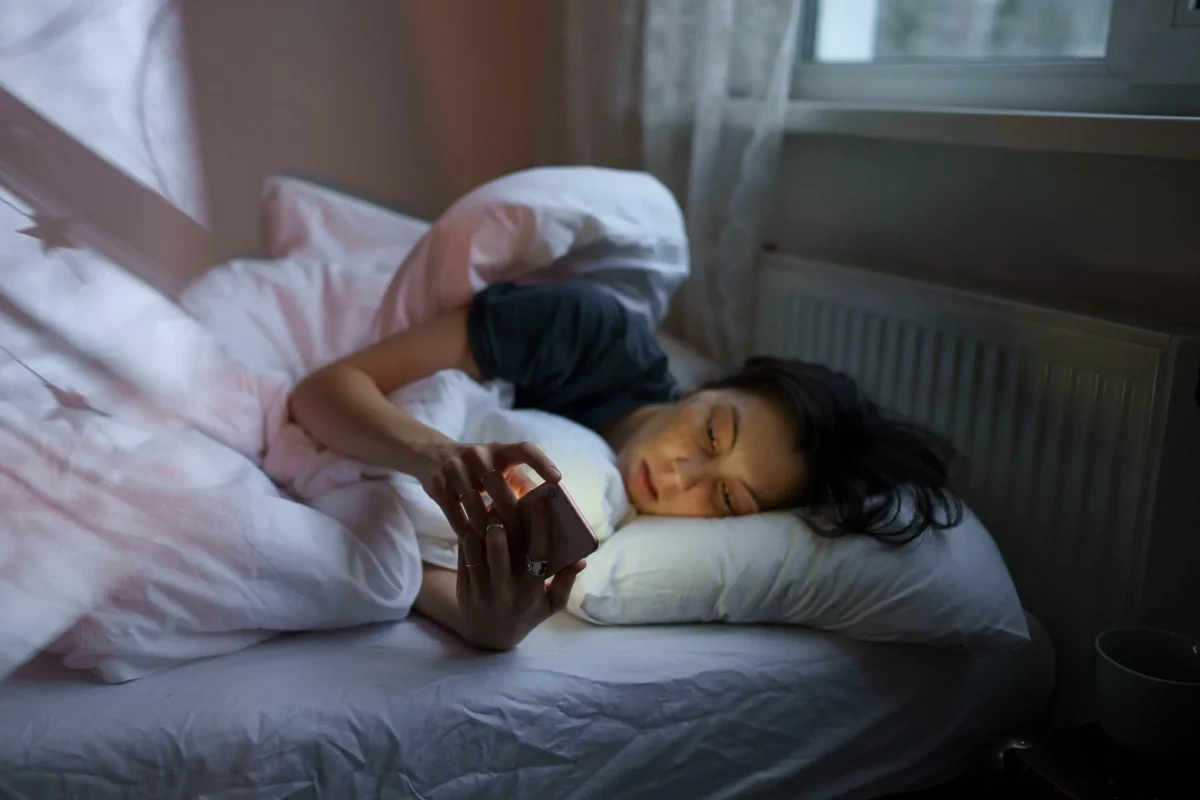
After a long, grueling school day, a high school student absolutely deserves to wind down. Without even putting too much thought into it, the student will fall into their comfortable bed, turn on their side, grab their phone, and open social media.
They’ll stay there for fifteen minutes, they’d tell themselves. But before they know it, an hour unfolds into three, and sometimes even into six. The sun has already set, and their book bag has yet to be touched, and the laundry has yet to be done, but at least they were able to relax.
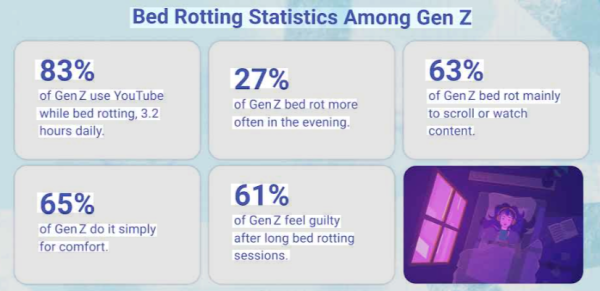
Yes, the great act of bed rotting– defined as the act or practice of staying in bed all day or for a prolonged amount of time (Merriam-Webster)– could begin as early as 3:30 pm for some JCHS students and end as late as 1:00 am for others. Bed rotting has surpassed the ranks of a TikTok trend or a slang term– it has simply become a part of modern culture. Almost 49% of Gen Z and 41% of millennials have embraced doom scrolling into their living routines (The Economic Times). It’s a widespread phenomena that millions of people across all ages find themselves enjoying. It’s a perfect example of how technology can both distract and pleasure you, it can separate you from your responsibilities, and it can keep you curled around its finger for hours.
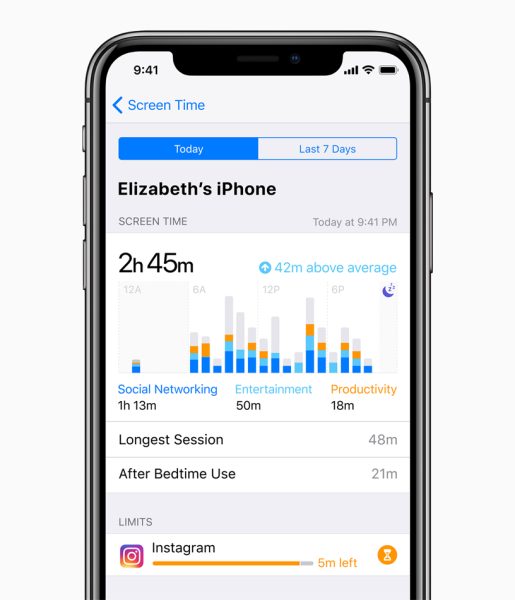
Enter Screen Time: an Apple feature that allows parents to dictate how and when their teenager uses their phone.
Screen Time could mean creating specific time limits for some apps’ usage. It could mean banning certain apps and content on a phone. It could even mean establishing “downtime”, where all apps become inaccessible at a time that the parents decide (this feature, downtime, might be the closest to doomsday for many).
A lot of teenagers dread seeing that message that takes up the entirety of their screens, saying You’ve reached your limit on this app. It’s the screen of doom. After that? There’s nothing they could do about it, because Screen Time limits are usually secured by a four digit code that is set up by parents. Unless a teen knows the code themselves, they cannot extend their scrolling time. Starting at, maybe, 8 pm every night, they are effectively locked out of heaven. And the world without a timeline to scroll endlessly through must be hell.
I argue, however, that Screen Time is a positive imposition on teenage life. For all the obscure and seemingly-evil rules that parents may enforce on their children, I think that Screen Time is the most beneficial.
Screen Time is more wondrous than it may seem for both what it prevents and what it provides.
Firstly, it can prevent the physical health issues that result from bed rotting. When one is inactive for a prolonged period of time, that continued inactivity can negatively affect blood circulation, and lead to the increased risk of blood clotting (The Economic Times). Being inactive for that long is also taking away ample time for exercise, which is vital for teenagers’ growth. Screen Time limits cut off those long periods of inactivity short, decreasing physical health risks for the average person and providing them more time to get on their feet and embrace movement.
Another result of bed rotting that can be prevented by Screen Time is increased mental health issues, including depression and anxiety. While social media can be used to uplift one’s mood through humorous, positive or stimulating content, it can also be used for the opposite purpose. Social media can invoke insecurity about one’s own life because of how accessible it is to view the glamorized, “perfect” lives of others. Teenagers are especially susceptible to losing self-esteem because apps like Instagram or Snapchat make it too easy to compare themselves to the bodies, relationships, and lifestyles of their peers. Imagine how many negative, self-critical thoughts a teenager must create in their heads after just one hour of bed rotting.
Imposing limits on Screen Time helps minimize the duration of time spent scrolling, which means less time to compare oneself, and less time to weaken one’s own self-esteem.
More than personal insecurity, some teenagers may find themselves doom scrolling, or tumbling down news feeds of horrifying and depressing real-world events that make one feel sad, frustrated, etc (Cambridge Dictionary). Doom scrolling allows teens to directly enhance their anxiety about scary or sad things in the world that they cannot directly fix. And when a teen is struggling with that crisis-anxiety, plus the negative self-esteem gained from comparing themselves to others, they struggle to carry out their own responsibilities.
The academic and athletic performance of high school students is directly related to how anxious they are and how much sleep they get. So when bed rotting and doom scrolling take over a large portion of their day– sometimes, even leaking into their sleep schedules— negative thoughts are bound to accumulate and weaken that performance. Screen Time prevents unnecessarily long scrolling periods, and the teen will then be more focused on their academic and athletic responsibilities with the newly acquired time.
Personally, my parents have never imposed Screen Time limits on my devices. This obviously led to nights where I would scroll well past 10 pm, which would constantly bar me from getting my recommended eight hours of sleep (TeensHealth). Just a few weeks ago, I personally established Screen Time limits on my own iPhone, in hopes of increasing my productivity.
Has my plan succeeded?
Interestingly, it has. My hours spent on social media have decreased from five hours a day to a little more than an hour. I’ve found myself completing my homework earlier, since the message that says You’ve reached your limit on this app has been stopping me from continuing any longer than that, forcing me to look outside of my phone and onto my homework. I’ve also made a downtime restriction– the feature rivaling doomsday in dramatics– and my sleep has been steadily improving. Prior to Screen Time, I had been sleeping around 4 to 5 hours a night, because I would procrastinate my work until the very last minute by means of bed rotting. After Screen Time, I sleep around 6 to 7 hours a night, which still isn’t the recommended 8, but I am gradually getting closer.
I’ve had a positive experience with Screen Time, but I know that others may have a different outlook. To observe other perspectives, I asked sophomores Ava Geraci and Deanna Skikus about their own experiences with Screen Time.
Ava’s a triple athlete (soon to be quadruple, come the first flag football season) as she plays on both the girls’ volleyball and the girls’ softball teams, and she runs in winter track. Deanna also plays for Caldwell Volleyball while also balancing a club softball career. Both of them are extremely busy– if they’re not practicing their sports, they’re studying for a test, or cramming in last-minute homework.
I asked the two of them how they felt about Screen Time.
“I like it,” Ava replied. She explains that it helps her “focus to do things other than scroll on my phone.” As a busy athlete, it’s probably best for her to spend her time wisely and work on her schoolwork when she can. When I asked her if she thinks that more people in Caldwell could benefit from the feature, she replied, “I think more people should use it. I think it’s really good for teenagers.”
Deanna, on the other hand, doesn’t have as much a positive experience with the limitations. She has a strong hatred for it, telling me that while it does help her with “focusing on homework,” it ultimately cuts her time way too short, and she feels that she “can’t do anything” on her iPhone. Her parents’ Screen Time limits are so strict that when I interviewed her, she had to answer my call through her laptop.
While students’ perspectives on Screen Time vary, the productivity that is born from the feature is a strong argument for its effectiveness. I believe that Screen Time is a positive limitation and can both prevent health issues for the average teenager and also provide them with the time to do more beneficial activities than bed rotting.
JCHS students stand to benefit greatly from creating limits on their device usage through Screen Time. While it may be annoying to many at first, I advocate for its imposition because it can change a teenager’s routine for the better– maximizing their productivity, increasing body health, and improving their sleep.