





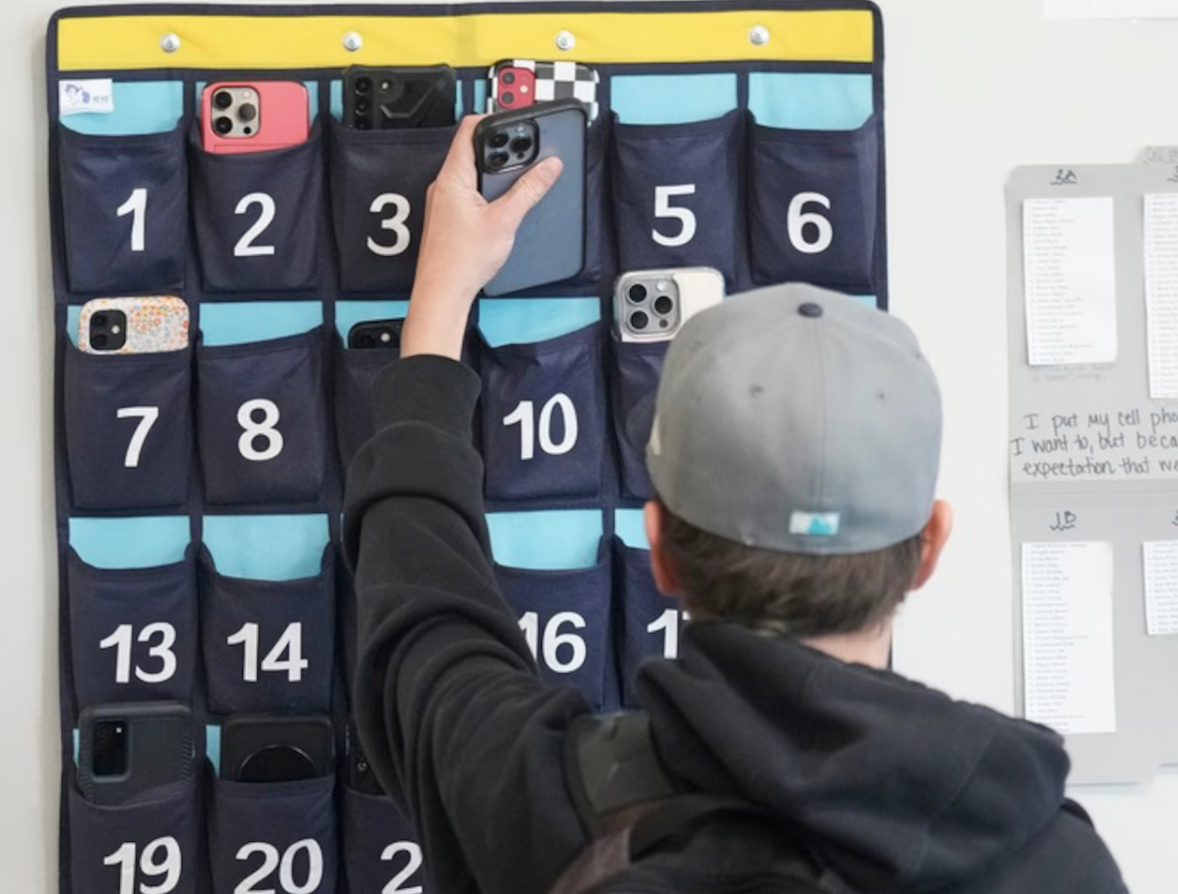
As the bell rings at James Caldwell High School, students tuck their smartphones out of view, many into pouches or out of reach, in line with the school’s phone policy. The goal: fewer distractions, more engagement, clearer focus. Our policy here does not go as far as some states which have instated full “bell to bell” bans. Some may say it makes it more workable. Across the nation, a growing movement is under way to restrict or ban student cell-phone use during school hours. In New York state, for example, lawmakers agreed on a plan to ban cellphones in public schools from “bell to bell” beginning next year (AP News).
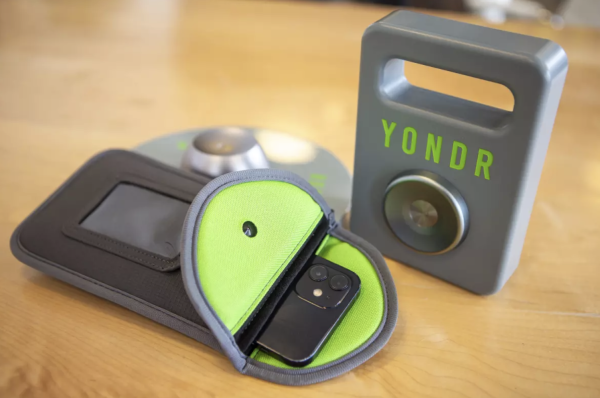
Phone pouches or sealed storage aim to remove one of the most persistent classroom distractions: students checking messages, scrolling social media, or answering texts mid-lesson. Administrators argue that when phones are out of sight, students are more likely to look up, listen, and ask questions. Educators point to smartphone and social-media use as contributing to distraction, disengagement, even declines in mental-well-being (Education Week). In New York, this debate is settled. Chancellor David Banks told Education Week that “during the school day I see no good reason for the kids to have access to their phones.”
At James Caldwell High the expectation is: phones must be stowed and silent during class unless a teacher authorizes their use. If seen, the device may be confiscated. While that is a firm policy, it does not amount to a full statewide ban. By contrast, states like New York and California are moving toward or have enacted laws requiring more sweeping restrictions. This matters: total bans or “bell to bell” bans remove confusion. No phones during lunch, no phones in hallways, no phones during non-instructional times. At JCHS, we retain more flexibility; students may still use phones before school, after dismissal and during certain times when there is no lecture. That flexibility might actually serve us well: it makes the policy less disciplinary, more sustainable, and more likely to gain student, parent, and teacher approval.
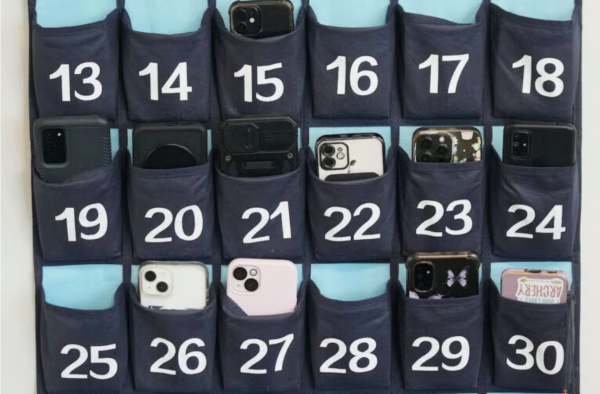
Students here see improvement, and teachers likely do, too. Some say they feel less tempted to check their phones; some say conversations in hallways are more alive, fewer heads buried in screens. Opinions on the policy differ. “I don’t really mind it,” said a James Caldwell High School senior. “When no one has their phone out, people actually talk to each other. Teachers aren’t complaining about phones and you get more done.”
But, not everyone agrees. Another student states, “I’d rather we just keep them in our backpacks.” Many believe they are responsible enough to keep their personal devices on them without interfering with their learning.
Like many schools nationwide, Caldwell is still learning what “phone-free” should mean. The policy may evolve, but for now it represents a step forward rather than a full ban. In a time when entire states are sealing phones away from first bell to last, our school’s approach might be the right call. It is less extreme, more balanced, and more realistic. The phone policy at James Caldwell High is more positive. It recognizes the problem: phones can obstruct attention, cause distraction, and disrupt connections between student relationships as well as teachers. But, it also recognizes community values, that students still arrive and depart with their phones, parents can stay in touch, and exceptions exist.